Watch on YouTube
The first question everyone asks is, "What is the New Zealand travel cost for two weeks?" It sounds simple, but it is actually the wrong place to start. I have seen the same two-week holiday cost one traveller NZ$8,000 and another NZ$15,000. That difference is not luck. It is the plan.
Your route controls your driving, fuel, accommodation nights, vehicle choice, flights and time. Get the chain right and you can keep thousands of dollars in your pocket without cutting the experiences that make New Zealand special.
All figures below are in New Zealand dollars and exclude international airfares. Use them as a realistic planning guide, then price your own travel dates and preferences.
Key Takeaways
The Route Is the Real Budget
Most people calculate a New Zealand travel cost by pricing a car, a hotel and a few tours, then adding them up. The problem is that those individual prices do not show the cost of an inefficient route.
Every unnecessary kilometre means fuel, time and often another night of accommodation. A poorly planned South Island loop can add roughly 600 kilometres and two extra nights. In peak season, that can mean NZ$500 to NZ$600 spent for absolutely no better holiday.
The best approach is to choose the locations first, put them in the right order, and minimise backtracking. For a practical two-week North and South Island trip, allow four nights in the North Island around Auckland, Rotorua and Coromandel. Rather than driving all the way to Wellington and taking the Cook Strait ferry, fly from Auckland to Queenstown. This avoids a long driving day and can create better options for car rental availability and airfare pricing.
From Queenstown, explore the South Island from south to north. That direction can also help with rental pricing because operators may need vehicles moved north again. A Queenstown pickup with a Christchurch drop-off is worth checking when comparing quotes.
This is the central idea behind every sensible New Zealand travel cost calculation: plan the route before pricing the pieces.
Get the free 2-week New Zealand itinerary: use a practical North and South Island route designed to reduce backtracking and wasted travel days — download the free itinerary.
The Six Costs to Include in Your New Zealand Travel Cost
Once the route is settled, your New Zealand travel cost becomes much easier to calculate. There are six core categories to include.
1. Transport
In peak summer, a compact rental car with standard insurance and an excess is roughly NZ$80 to NZ$100 per day. An SUV or people mover is closer to NZ$180 to NZ$200 per day.
For the Auckland to Queenstown domestic flight, allow about NZ$250 per person for a flexible, refundable direct fare. This also applies to children over two years old.
2. Fuel
Petrol is around NZ$3.50 per litre. On a route of approximately 2,600 kilometres, allow about NZ$680 for fuel in a compact car or around NZ$900 for an SUV or people mover.
3. Accommodation
Accommodation is where your New Zealand travel cost can vary dramatically. A holiday park cabin can be about NZ$100 per night for two, while a motel or Airbnb generally sits around NZ$160 to NZ$220.
There is no single correct choice. The trick is to spend where it improves the holiday and save where it does not.
4. Tours
Allow roughly NZ$250 per person for a standout experience such as jet boating, kayaking, a guided walk or a short helicopter flight. For two weeks, planning three special experiences is a sensible benchmark.
5. Food
Budget around NZ$50 per person per day if you mostly self cater and occasionally eat out for dinner. Cooking some meals is one of the simplest ways to keep a New Zealand travel cost under control while still enjoying good local dining on selected nights.
6. Entry Costs
Allow about NZ$100 per person for the International Visitor Levy, plus approximately NZ$23 per person for the NZeTA. These are small compared with accommodation and transport, but they still belong in the full holiday calculation.
What Is Free, and What Is Worth Paying For?
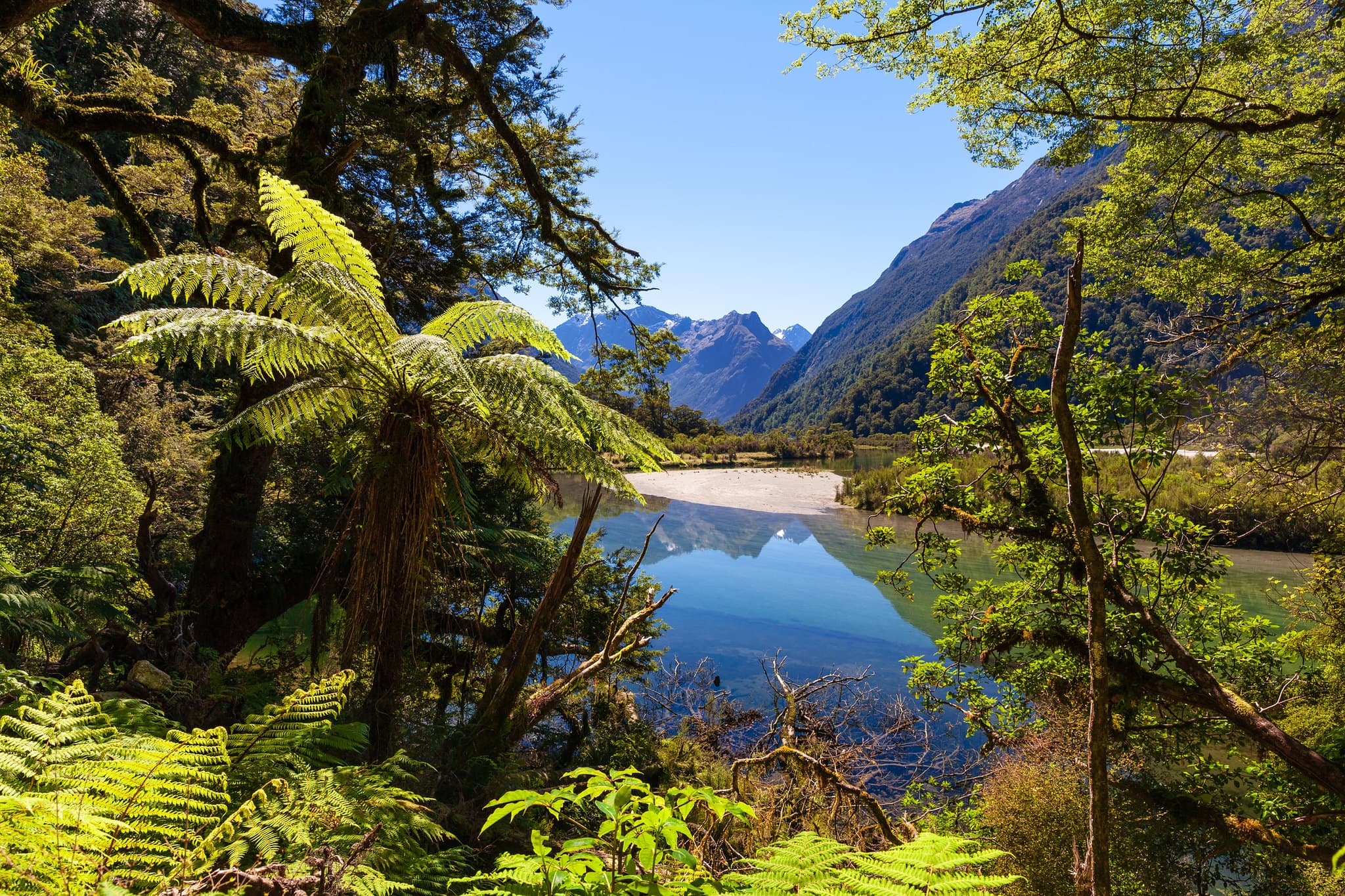
New Zealand scenery does not have to cost a fortune. In fact, many of the best parts of a trip are free: day walks, tracks, beaches, lookout points and alpine viewpoints. The visitor levy effectively supports access to much of this natural environment.
The smarter New Zealand travel cost decision is not to pay premium prices for something already available independently. Use free tracks and viewpoints generously, then reserve money for access or guidance that genuinely changes the experience.
For example, some exceptional walks need a boat transfer. A water taxi for a Milford Track day walk or a boat trip to Mou Waho Island on Lake Wānaka may cost NZ$60 to NZ$100 per person. Those are the kinds of extras that can be worth every cent.
Guided trips cost more because you are paying for local knowledge, safety and access that you cannot easily arrange on your own. The golden rule is simple:
Three Realistic Two-Week Budgets
Here is what a New Zealand travel cost looks like for three different travel styles on the same 14-day route.
Mid-Range Couple: Around NZ$8,100
This example suits a couple in their mid-thirties travelling with a compact car, motels, the occasional bed and breakfast, mid-range meals and three special tours.
Total: NZ$8,100 for two people, or roughly NZ$4,000 per person. At the stated conversions, that was approximately US$2,400, €2,000, A$3,330 or S$3,000 per person.
Family of Four: Around NZ$12,600
For two adults and two children using an SUV, cabins and two-bedroom units, the total comes to around NZ$12,600, or roughly NZ$900 per day for the family.
The family New Zealand travel cost is not higher simply because children are expensive. It rises because the family needs a bigger vehicle, bigger rooms, four domestic flights, four sets of food and four entry charges.
Premium Couple: Around NZ$12,700
A semi-retired couple travelling with a premium car, bed and breakfasts, cottages, several NZ$500-plus stays and quality dining can expect a total around NZ$12,700. That works out to roughly NZ$6,350 per person.
The important point is this: the same country and the same two weeks can produce very different totals. Change the plan, not the people, and you change the number.
Six Ways to Reduce Costs Without Cutting Experiences
1. Travel south to north
Ask rental companies whether a south-to-north one-way booking is priced favourably. Operators often need cars repositioned north, so collecting in Queenstown and returning in Christchurch can unlock a better deal.
2. Book early
New Zealand operates on supply and demand. The best-value stays sell first, rental car prices rise as availability shrinks, and domestic fares climb as seats fill. For motorhomes, even a 5% early-bird deal on a NZ$10,000 rental puts NZ$500 back in your pocket.
3. Skip the Auckland arrival-day rental
There is little point collecting a car immediately after a long international flight if the first night is in Auckland. Take an airport transfer, rest, then collect the vehicle the following morning. It can save a full rental day.
4. Use fuel apps
Fuel discounts of 8 to 12 cents per litre may not sound exciting, but they add up over 2,600 kilometres. A small saving repeated often is still a saving.
5. Book standout tours early
The best tours follow the same supply-and-demand rules as accommodation and vehicles. If there is one must-do experience, secure it early rather than settling for whatever remains.
6. Consider covering the excess through travel insurance
Rental companies can charge NZ$30 to NZ$50 per day to reduce the excess. A broader travel insurance policy may cover the rental excess instead, potentially saving a meaningful amount across two weeks.
There is an important tradeoff. If there is damage or an accident, the rental company can charge the excess to the credit card holding the bond. The excess can be NZ$3,000 to NZ$4,000 for a car and NZ$7,000 to NZ$8,000 for a larger motorhome. You would then claim reimbursement through the travel insurer. It is a real saving, but it means more administration if something goes wrong.
The Bottom Line on New Zealand Travel Cost
New Zealand is neither simply expensive nor cheap. It is a chain of decisions. The route determines the driving. The driving affects fuel, timing and overnight stays. Your transport, accommodation, tours and food choices then create the final New Zealand travel cost.
A carefully planned mid-range couple can do two weeks for around NZ$8,100, excluding international airfares. A family needing more room and a larger vehicle may be closer to NZ$12,600. A more indulgent couple can comfortably reach NZ$12,700 or more.
Build a route with minimal backtracking, use the outstanding free walks and scenery, then spend confidently on the handful of experiences that truly matter. That is how the same two-week trip becomes a much better holiday and a much more manageable New Zealand travel cost.
New Zealand Travel Cost FAQs
How much does two weeks in New Zealand cost for a couple?
A realistic mid-range budget is about NZ$8,100 for two people, excluding international flights. This includes a compact rental car, domestic flights, fuel, motels, food, entry costs and three tours.
What is the biggest factor in a New Zealand travel cost?
The route is often the biggest factor because unnecessary driving adds fuel, uses valuable time and can create extra accommodation nights.
Are national parks and walks expensive in New Zealand?
Most day walks, tracks, beaches, lookouts and alpine viewpoints are free. Some premium experiences require paid boat access or guided services.
How can I reduce rental car costs in New Zealand?
Book early, compare south-to-north one-way options, avoid renting a car on your Auckland arrival day, and check whether travel insurance covers the rental excess.
Watch More New Zealand Travel Videos
Subscribe to our YouTube channel for destination guides, travel tips, and itinerary inspiration.
Visit Our YouTube Channel