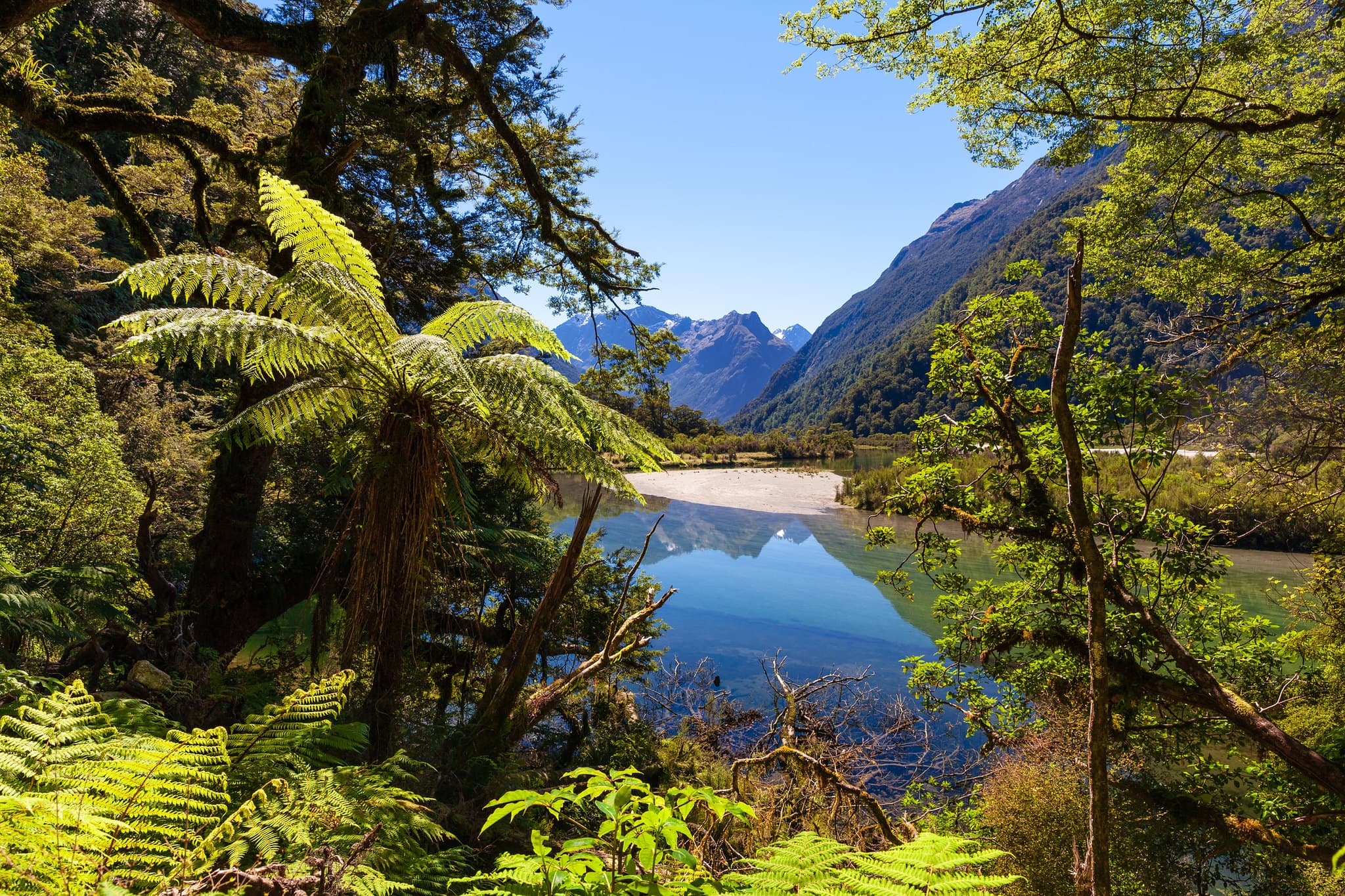
Watch on YouTube
New Zealand can be a surprisingly difficult trip to plan, even if you have plenty of travel experience. The mistake that causes the most trouble? Booking accommodation before you have worked out your route.
A beautiful lodge is tempting. But once those nights are fixed, everything else has to fit around them. Suddenly, your relaxed New Zealand road trip includes a nine-hour driving day just to reach the next booking.
After 35 years of planning New Zealand holidays, my advice is simple: work out your places and dates first, then make your bookings. That does not mean leaving reservations until the last minute. It means doing things in the right order.
These five steps give you a practical way to build an itinerary that suits your travel style, catches awkward journeys, and tells you which reservations deserve attention first.
Key Takeaways
Why Booking Hotels First Creates Problems
Here is how the booking rabbit hole usually starts. You find a lovely Queenstown property with free cancellation, so you reserve three nights. Then you try to fit in Milford Sound. Next comes Franz Josef, followed by the ferry between the islands.
Each choice seems reasonable on its own. Together, they may create a route that simply does not work comfortably.
In my work as a travel designer, I see this regularly. Getting the locations and timing right does a huge amount of the planning work. Once those foundations are sound, the individual bookings become much easier.
Timing is particularly important. February, rather than December, is New Zealand’s busiest month for international visitors. Kiwi families may be back at work after Christmas, but overseas arrivals are at their peak. If you are traveling in February or March, you are still competing for popular rooms.
The answer is not to grab accommodation at random. It is to establish where you need to sleep, on which dates, before committing.
The Five-Step New Zealand Trip Planning Method
The process follows a straightforward sequence:
1. Your trip details: establish who is traveling and how you want to travel.
2. Your route, dates, and locations: decide where to stay and check the journeys between stops.
3. Your personalized itinerary: bring accommodation suggestions, activities, and practical details together.
4. Travel reservations: book the important components in a sensible order.
5. Booking confirmations: organize everything against the correct day.
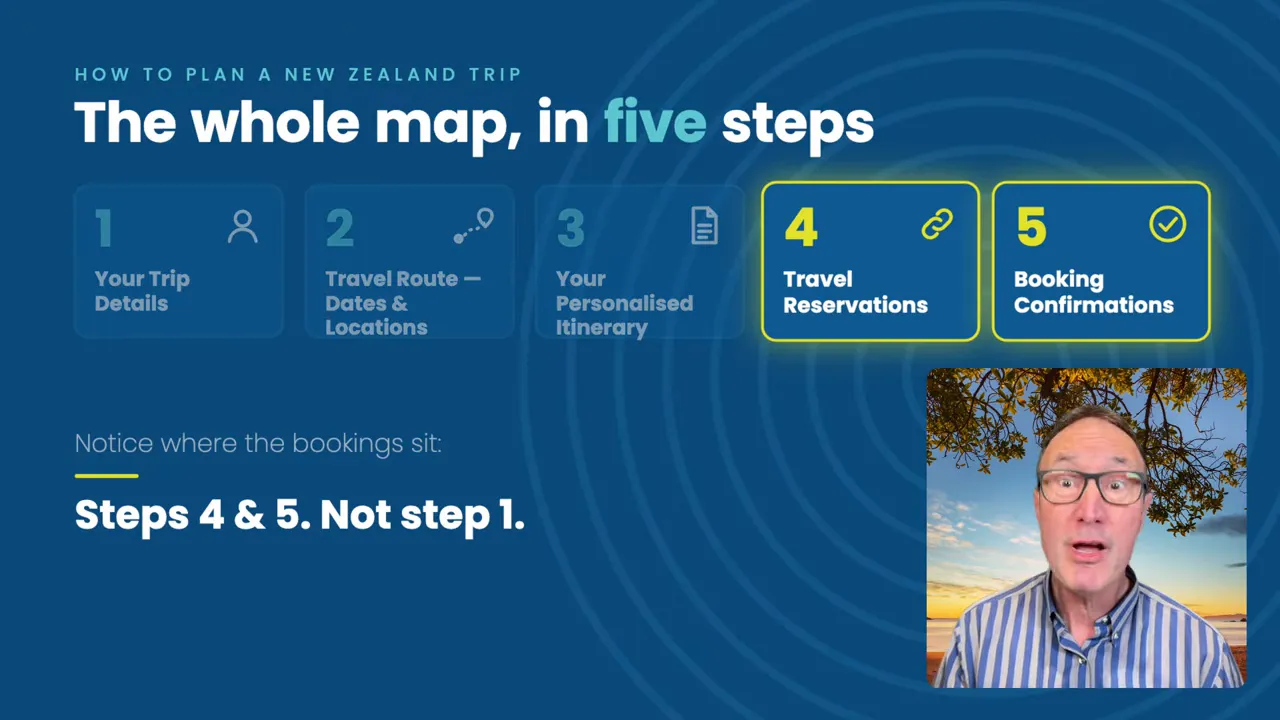
Notice where reservations sit: step four, not step one. The first three steps are there to make sure you are booking the right things.
Where AI Can Get a New Zealand Itinerary Wrong
AI can produce a travel plan quickly, and it often sounds wonderfully confident. But confidence is not the same as accuracy.
We use AI ourselves. The issue is relying on it without local knowledge and a common-sense check. Three problems deserve particular attention.
Use technology to help organize the trip, but check whether the proposed days make sense on the ground. That is why we built our planner around firsthand experience rather than treating a generated list of destinations as a finished holiday.
Step 1: Start With Your Trip Details
Before asking where you want to go, ask who is going. A family with two ten-year-olds needs a different pace from a honeymoon couple, even with identical travel dates.
Write down the details that will shape every later decision:
Be honest here. An itinerary should fit the holiday you actually want, not just squeeze in the largest number of famous places.
A Motorhome Day Is Not a Rental Car Day
This distinction changes the route more than many people expect. A motorhome is slower on hills. You also need time to settle into a holiday park, connect services, and ideally be parked before dark.
As a golden rule, plan around three to four hours of motorhome driving per day. A rental car gives you a little more flexibility, but that is not a reason to fill every available hour with driving.
If you have not decided on transport, the campervan versus rental car guide can help you compare the two styles before shaping the itinerary.
Step 2: Map Your Route, Dates, and Overnight Stops
This is the step that does so much of the work. Build an overview showing every location, the number of nights there, and the driving time to the next stop.
A list of attractions cannot tell you whether a holiday flows well. A night-by-night route can. It shows where you are trying to do too much and where a different overnight base would make life easier.
The Classic Trap: Queenstown to Milford Sound
Queenstown to Milford Sound is approximately 288 kilometers, taking around four hours each way. Add a two-hour cruise and you are looking at roughly ten hours before allowing for stops.
For an Australian comparison, think of driving from Sydney to Canberra and back in a day, except on mountain roads. It is a substantial outing, not something to casually combine with an afternoon elsewhere.
A better fit for many self-drive itineraries is two nights in Te Anau. Milford Sound is around two hours away from there, and an earlier start can put you on the water before the Queenstown tour buses arrive.
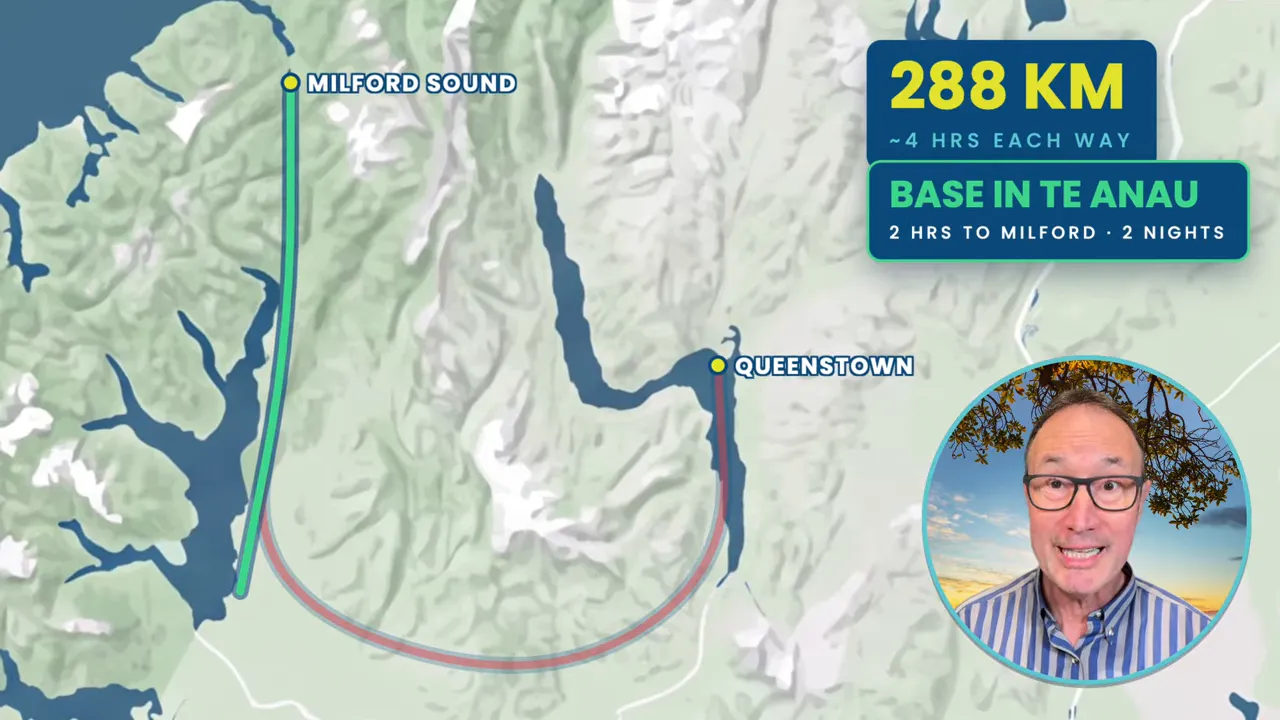
The important point is not that every person must follow the same route. It is that your overnight locations should support your activities, rather than make them harder.
Check Long Drives and Inter-Island Logistics
If a driving leg is consuming too much of the trip, consider whether a domestic flight would work better. Our route planner allows you to replace a long road section with a flight rather than forcing every journey onto the road.
The Cook Strait crossing also needs attention. Many rental car companies require you to leave their vehicle in Wellington and collect another in Picton, rather than take it on the ferry.
Check your chosen company’s arrangements and build any vehicle change into the itinerary. The ferry terminal is not the place to discover that your plan assumes something your rental agreement does not allow.
By the end of this step, you should be able to see where you will sleep each night and how you will get there. You still have not booked anything, but the backbone of the holiday is in place.
Step 3: Build Your Personalized Itinerary
Now turn that route into a usable daily plan. This is where the accommodation level, interests, and travel style you chose earlier become practical suggestions.
Our New Zealand travel planner brings the information together in about two to three minutes. It includes seven useful components:
1. A night-by-night route with driving times.
2. Accommodation suggestions matched to your selected level.
3. Activities that reflect your interests.
4. Public holiday flags so important dates do not catch you out.
5. PDF and Excel downloads for keeping a copy of the plan.
6. An emailed copy and editing options so you can revise and regenerate the itinerary.
7. A hotel availability checker to help with the next stage.
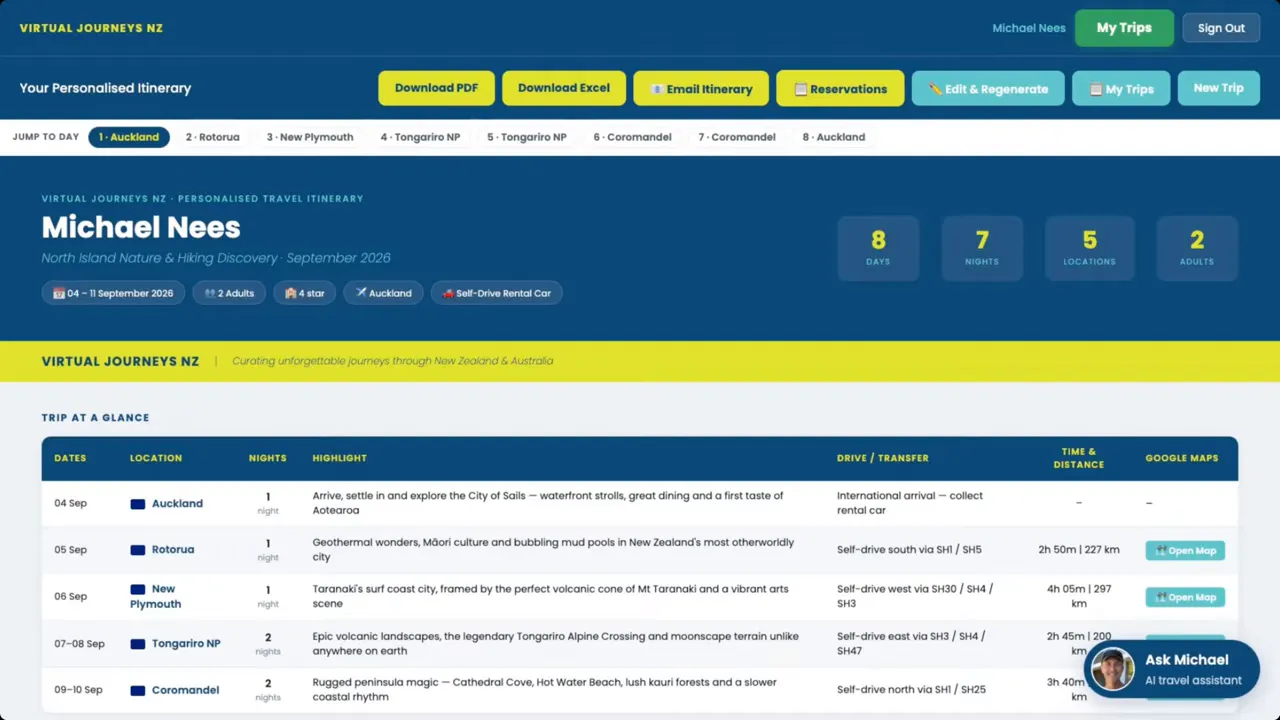
The value is having the whole trip together instead of scattered across separate searches. You can assess the route, accommodation suggestions, and activities as one holiday.
Your first itinerary is free. A Travel Supporter Pass provides one additional itinerary, and our personal travel consultation service is available if you get stuck or need help with a longer, more complex trip.
Create Your First New Zealand Itinerary Free
Build a personalized route with overnight stops, driving times, accommodation suggestions, and activities before you book: Plan My New Zealand Trip.
Step 4: Make Reservations in the Right Order
Once the itinerary works, it is time to book. Do not simply reserve whichever item happens to appear first in your search results.
Start with accommodation in places where the supply is limited. Milford, Wanaka, Franz Josef, and the Abel Tasman area are examples where the right overnight arrangements can be harder to secure.
City hotels generally offer more choice, so they can usually wait while you address the nights with fewer alternatives. Then secure your vehicle and any domestic flights, followed by the major tours you particularly want to do.
You do not need to book every activity. Focus on the experiences that really matter to you, such as Hobbiton or a penguin tour, rather than filling every day with reservations.
Let Your Dates Set the Priorities
There is another peak period that matters, especially for motorhome trips. From around December 20 through the end of January, Kiwi families are on their summer holidays.
Holiday parks in popular areas such as Abel Tasman and the Coromandel can book out eight to nine months ahead. If your route passes through those places during that period, those nights move to the top of your booking list.
This is exactly why route planning comes first. You cannot identify the most urgent reservation until you know which location you need on which date.
Our itinerary includes reservation links for rental cars, campervans, accommodation, and tours. To be upfront, we earn a small commission when you book through those links. You pay the same price, and the commission helps keep the planner free and supports further improvements.
Step 5: Keep Every Confirmation Against the Correct Day
A collection of reservations is not quite the same thing as an organized trip. The final step is to put every confirmation in one place, attached to the day it belongs to.
Record accommodation, transport, and tour confirmations as you book them. That way, your itinerary becomes the working record of the holiday, rather than another document sitting beside an inbox full of PDFs.
Instead of juggling dozens of browser tabs, you have one complete plan. If you prefer paper, print it out. The important thing is that the daily schedule and the booking details stay together.
Adding Australia? Check the Seasons Before Choosing Dates
The same five steps apply whether you are visiting New Zealand, Australia, or both. But do not assume that New Zealand summer means ideal conditions everywhere in Australia.
The tropical north, including Cairns, the Daintree, and the Great Barrier Reef, has its wet season roughly from November to April. That overlaps with New Zealand’s summer.
For many combined trips that include tropical northern Australia, September and October offer a useful sweet spot: dry-season conditions in the north and spring in New Zealand.
The planner supports trips of up to 35 days, so a two-country itinerary fits within that range. Choose the destinations and timing together, rather than adding Australia after the New Zealand bookings are already fixed. The New Zealand travel seasons guide provides more context for choosing your dates.
A Great New Zealand Itinerary Is About the Right Order
A successful itinerary is more than a list of beautiful destinations. It puts the right places in an order that makes sense for your dates, transport, and interests.
Your trip details shape the route. The route determines your overnight dates. Those dates reveal which bookings need to happen first.
Get that sequence right, and you avoid building an entire holiday around a hotel in the wrong town or an exhausting transfer day. Places and dates first, bookings last. It is a small change in approach that makes New Zealand travel planning much simpler.
Watch More New Zealand Travel Videos
Subscribe to our YouTube channel for destination guides, travel tips, and itinerary inspiration.
Visit Our YouTube Channel